Florida Short-Term Rental Insurance: What Airbnb Hosts Need to Know
Why Florida short term rental insurance is different from a standard homeowners policy
If you are renting out your home, a spare bedroom, or a vacation property on Airbnb or Vrbo, your standard homeowners insurance policy almost certainly does not cover you. Florida short term rental insurance exists because the moment you accept money from a guest, most standard home policies treat the property as a commercial enterprise and exclude losses that occur during rental periods. In a state that draws tens of millions of tourists every year, that gap in coverage has real financial consequences for hosts who do not know it exists.
Polk County, the Space Coast, the Gulf beaches, and the Florida Keys all have active short-term rental markets. Hosts in these areas carry significant property values and receive guests from all over the world. Understanding what your current policy covers and what it excludes, before you take your first booking, can protect you from a five- or six-figure loss.
What a standard homeowners policy actually excludes
Most homeowners policies include a business-pursuits exclusion. When a carrier discovers you were earning rental income at the time of a claim, they can deny coverage entirely. Common scenarios where this plays out:
- Guest liability: a guest slips near your pool, breaks an arm, and sues you. Your homeowners liability coverage was written for household members and social guests, not paying customers.
- Guest-caused property damage: a group leaves with a damaged kitchen, broken furniture, or a flooded bathroom. Most homeowners policies will not pay for damage caused intentionally or recklessly by tenants.
- Theft by guests: a guest steals electronics or jewelry. Homeowners policies typically exclude theft by someone with permission to be in the home.
- Lost rental income: a covered event like a fire forces you to cancel bookings for three months. A standard homeowners policy has no mechanism to replace that revenue.
Airbnb's Host Guarantee and Host Protection Insurance programs provide some baseline coverage, but both come with exclusions, sublimits, and claims processes designed to protect Airbnb as a platform, not you as a property owner. They are a supplement, not a replacement for proper insurance.
Types of coverage that actually protect Florida hosts
There is no single "short term rental policy" that every carrier issues. What you need depends on how often you rent, whether you also live in the property, and the value of your home and contents. Here are the primary options.
Short-term rental endorsement on a homeowners policy
Some carriers will add a short-term rental endorsement to an existing homeowners policy if you rent occasionally, say fewer than 90 days per year. This endorsement closes the business-pursuits exclusion for those rental periods and typically adds liability coverage for paying guests. It is the simplest and often the least expensive fix for occasional hosts, but not every carrier offers it in Florida.
Dwelling fire policy with short-term rental coverage
If you own a vacation property that you do not live in full-time, a dwelling fire policy is often the right foundation. Unlike a homeowners policy, a dwelling fire policy is written with rental income in mind. You can add liability coverage and loss-of-rents protection on top of the base structure coverage.
Commercial short-term rental policy
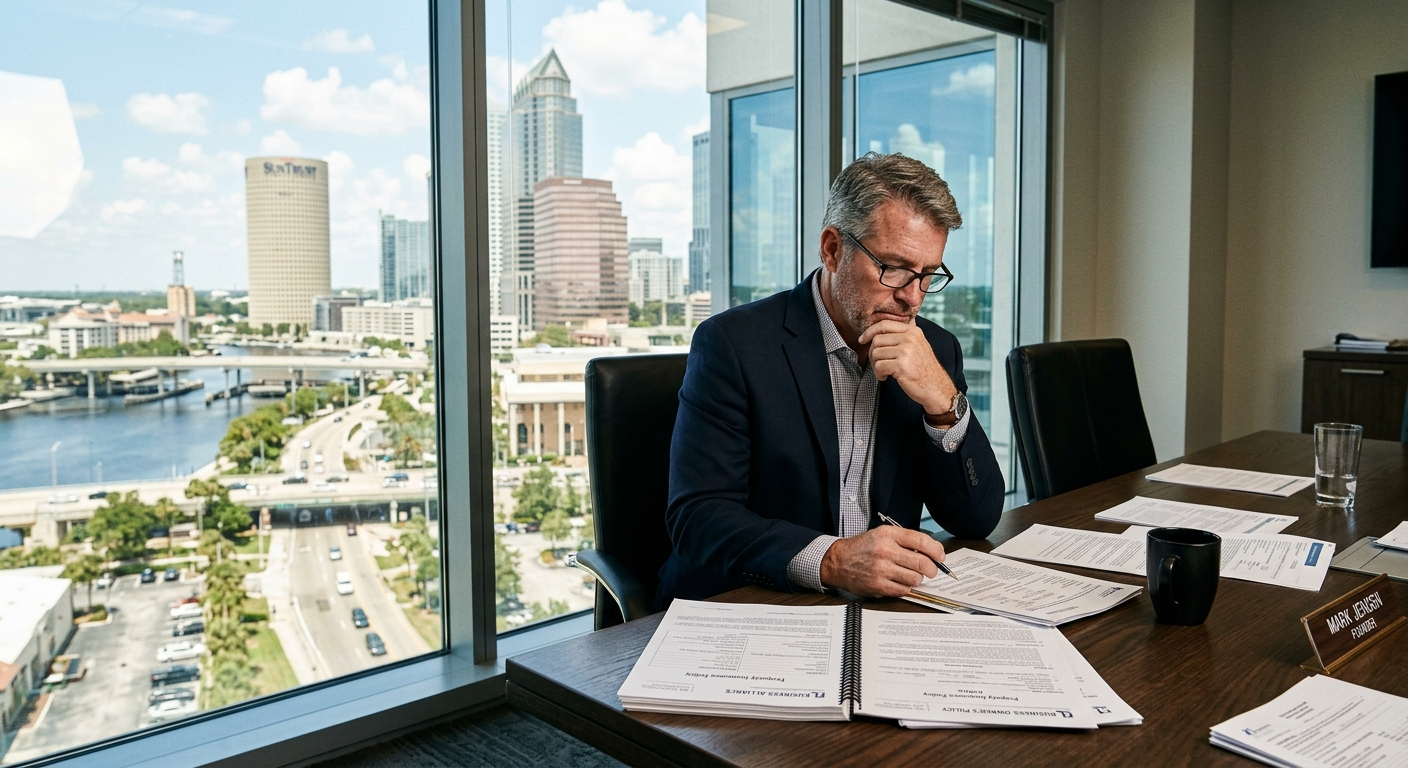
If you manage multiple properties, operate at scale, or have a property that generates significant income, carriers may classify you as a business. In that case, a commercial policy built around a Business Owners Policy (BOP) or a commercial property and general liability combination may be the correct structure. This becomes especially relevant if you have staff, use a property management company, or own properties through an LLC.
Stand-alone vacation rental insurance
Several specialty carriers, including Proper Insurance, CBIZ, and others active in the Florida market, now issue policies written specifically for short-term rentals. These policies combine building coverage, contents, liability for paying guests, loss of rental income, and sometimes bed bug or vandalism coverage in a single form. They tend to cost more than a homeowners endorsement but provide broader protection for hosts who rent frequently.
Florida-specific risks hosts need to factor in
Florida presents a set of risks that hosts in other states do not face at the same intensity. When you are shopping for coverage, these are the exposures worth discussing with your agent.
Hurricane and windstorm damage
Florida sits in one of the most active hurricane corridors in the world. Your rental property needs windstorm coverage, and in many coastal counties that coverage is written separately or excluded from the base policy with a high hurricane deductible. That deductible is typically a percentage of your insured value, often 2% to 5%, not a flat dollar amount. On a $400,000 property , a 2% hurricane deductible means you absorb $8,000 out of pocket before coverage applies.
Flood damage
Florida has more repetitive-loss flood properties than any other state. Short-term rental properties near lakes, rivers, or the coast face real flood exposure, and flood damage is excluded from every standard property policy. You need a separate flood policy, either through the National Flood Insurance Program (NFIP) or a private flood carrier. If you are not sure whether your rental sits in a FEMA Special Flood Hazard Area, that is a conversation worth having before the next rainy season. Our separate post on Florida flood insurance covers the NFIP and private market options in detail.
Guest liability in a high-traffic state
Florida's tourism economy means your guests may be coming from far away, unfamiliar with the property, and potentially traveling in large groups for events like weddings or reunions. Liability exposure grows when you have eight strangers in a home with a pool, a dock, or a golf cart. Make sure your liability limits are meaningful. A $100,000 liability limit sounds reasonable until you price what a slip-and-fall lawsuit actually costs to defend in Florida. Many hosts carry $300,000 to $1,000,000 in liability coverage, and some add a personal umbrella policy on top for an extra layer of protection.
Mold and water intrusion
Florida's humidity is relentless. A slow leak under a rental property sink, left undetected between guest stays, can produce a significant mold problem in weeks. Some policies include mold remediation sublimits; others exclude it entirely. Ask specifically about mold coverage when you are comparing policies.
What short-term rental insurance typically costs in Florida
Rates vary considerably by property location, construction type, age, and coverage limits. Here are realistic ballpark figures to help you plan:
- Occasional-rental endorsement: typically adds $200 to $500 per year to an existing homeowners policy, depending on the carrier and rental frequency.
- Dwelling fire policy with rental endorsements: base policies for a Florida vacation home often run $1,500 to $3,500 per year , depending on location and coverage limits, before adding flood separately.
- Specialty vacation rental policy: stand-alone short-term rental policies from specialty carriers generally run $2,000 to $5,000 per year for a typical Florida single-family home, with pricing rising significantly for coastal properties.
- Flood insurance: NFIP premiums for a residential structure in a moderate-risk zone start around $700 to $1,200 per year . High-risk coastal zones can run $3,000 or more .
These are estimates. The only way to know what your specific property will cost is to get actual quotes. That is exactly the kind of comparison shopping an independent agent handles for you.
Florida regulations and platform rules hosts should know
Florida does not currently have a single statewide short-term rental licensing law, but that does not mean you are operating in a regulation-free environment. Local ordinances vary significantly. Some counties and municipalities require a local business license or vacation rental permit. Polk County and many coastal municipalities have registration requirements and may conduct inspections. Operating without a required permit can void your insurance coverage if a carrier learns you were not in compliance at the time of a loss.
At the state level, Florida Statute 509 governs public lodging establishments, and depending on how your rental is classified and operated, your property may need to meet specific safety standards including smoke detectors, fire extinguishers, and exit signage. If you are earning consistent rental income, talk to your agent about whether your operation would be better structured under a commercial policy or a hybrid approach.
If you also own long-term rental property in addition to a short-term rental, the coverage structure is different. Our guide on Florida landlord insurance breaks down what protects traditional rental properties rented by the year or month.
How to choose the right policy for your rental
The right coverage comes down to a few questions you should answer before you start comparing:
- How many days per year do you rent? Occasional hosts (under 90 days) often qualify for an endorsement; frequent hosts usually need a dedicated policy.
- Do you also live in the property? Owner-occupied rentals have different coverage needs than pure vacation rentals you never inhabit.
- What is the property worth, and what does it contain? High-end furnishings, electronics, and appliances increase your contents exposure and change the coverage conversation.
- Is the property in a flood zone? This determines whether flood coverage is urgent, not optional.
- Do you own the property personally or through an LLC? Ownership structure affects which type of policy applies and who the named insured needs to be.
Working through these questions with an agent who knows the Florida market and has access to multiple carriers is far more effective than going directly to a single carrier's website and hoping their one product fits your situation.
Get the right coverage for your Florida rental property
Garland Insurance is an independent agency serving Florida property owners from our office in Lakeland. Because we are independent, we shop multiple carriers on your behalf rather than pushing a single company's products. That means you get an honest comparison of what is actually available for your specific short-term rental, whether you need a simple endorsement, a dwelling fire policy, a specialty vacation rental form, or a commercial structure.
If you own a short-term rental in Polk County or anywhere in Florida and you are not sure whether your current coverage actually protects you during rental periods, the best move is to find out now, not after a claim. Visit our short-term rental insurance page to learn more about what we offer, or reach out directly to our team.
Call us at (863) 683-9334 or contact Garland Insurance online to get a review of your current coverage and a comparison of your options. We are here to make sure your rental income does not come with a hidden liability you did not know you were carrying.
Get A Quote
At Garland Insurance, securing your future is easy. Ready to protect what matters? Contact us for a quick quote and personalized insurance options!
Anna
Speak to Anna 24/7
Microphone ready
Start your custom insurance quote
Instant answers to your insurance questions
Schedule appointments or follow-ups
Personal Insurance
From auto and homeowners to renters and umbrella policies, we help protect your family and property. Let’s find coverage that fits your life.
Commercial Insurance
We customize policies for your industry's risks, like general liability and workers' comp, ensuring you can run your business worry-free.
Contact Garland Insurance
Recent Posts