Florida Dwelling Fire Insurance: Who Needs It and What It Covers
Florida dwelling fire insurance explained: what it is and why it matters
Florida dwelling fire insurance is one of the most misunderstood policies in the state, yet it fills a gap that a standard homeowners policy cannot. If you own a home that you rent out, leave vacant, or use as a seasonal property, a regular HO-3 policy likely will not cover it. That is where a dwelling fire policy steps in. Understanding how it works, who needs it, and what it does and does not cover can save you from a painful surprise after a fire, a windstorm, or another covered loss.
What is a dwelling fire policy?
A dwelling fire policy is a property insurance contract designed to cover the physical structure of a residential building when that building does not qualify for a standard homeowners policy. Despite the name, it covers more than just fire. Depending on the form you choose, it can protect against wind, hail, lightning, explosion, and several other named perils, or provide broad open-perils coverage.
In Florida, dwelling fire policies are written on one of three standard ISO forms:
- DP-1 (Basic Form) is the most limited option, covering only a short list of named perils such as fire, lightning, and internal explosion. It is often the cheapest form and the most common for vacant or hard-to-insure properties.
- DP-2 (Broad Form) adds perils like windstorm, hail, vandalism, and falling objects. Coverage pays on a broad named-peril basis, meaning a loss must be caused by a listed event.
- DP-3 (Special Form) is the most comprehensive dwelling fire option. The dwelling itself is covered on an open-perils basis (all losses are covered unless specifically excluded), while other structures and personal property are covered on a broad named-peril basis. Most landlords in Florida choose DP-3.
Each step up in form typically means a higher premium but also meaningfully broader protection. An independent agent can help you weigh the cost difference against the actual risk your property faces.
Who needs dwelling fire insurance in Florida?
Many Florida property owners do not realize their current policy does not cover a property they own. These are the most common situations where a dwelling fire policy is the right fit:
- Landlords renting to long-term tenants. If you own a single-family home, duplex, or small multi-unit building and rent it to tenants, you need a landlord policy. In Florida, that is almost always written as a DP-3 with a fair rental income endorsement. A standard HO-3 is void if a tenant is living in the home.
- Owners of vacant properties. Standard homeowners policies exclude coverage once a home sits vacant for 30 to 60 days (the exact threshold varies by carrier). A DP-1 is often used as a cost-effective bridge for vacant properties, though a vacant property insurance policy may offer more complete protection.
- Seasonal or second-home owners. Florida has thousands of snowbirds and seasonal residents who leave their homes empty for months at a time. If you are not occupying the home year-round and cannot qualify for a standard HO-3, a dwelling fire form fills the gap.
- Short-term rental owners. Renting your property on Airbnb or Vrbo? Standard homeowners policies are not designed for that use, and many carriers will cancel or deny claims if they discover the home is used for short-term rentals. A short-term rental policy or a DP form with the right endorsements is the proper solution.
- Owners of older or non-standard homes. Some properties do not meet underwriting requirements for a standard homeowners policy because of age, construction type, or prior claims history. A DP-1 or DP-2 can keep the structure insured when nothing else will.
What dwelling fire insurance covers (and what it does not)
Coverage depends heavily on which form you purchase. Here is a straightforward breakdown for each layer of protection:
The dwelling structure itself
All three DP forms cover the main structure of the home. Under a DP-3, that coverage is open-perils: a fire, a windstorm that peels off your roof, a lightning strike, or a falling tree limb is covered unless your policy specifically excludes it. This is the primary reason most landlords and seasonal homeowners in Lakeland and throughout Polk County carry a DP-3.
Other structures
Detached garages, fences, sheds, and similar structures can be added on DP-2 and DP-3 forms, typically at 10% of the dwelling limit. Under a basic DP-1, other structures may not be included automatically.
Personal property
This is where dwelling fire policies differ sharply from homeowners policies. Personal property coverage for the tenant's belongings is not included in a landlord dwelling fire policy. The tenant is responsible for their own belongings, which is why landlords routinely require renters to carry their own renters insurance policy. Landlord-owned appliances, window treatments, and furnishings left in the property can usually be added for an additional premium.
Fair rental value (loss of rents)
If a covered loss makes the property uninhabitable and tenants have to move out, a fair rental value endorsement reimburses you for the lost rent while repairs are made. This is often the most financially consequential endorsement for landlords and should not be skipped.
Liability coverage
Standard DP forms do not include personal liability protection. If a tenant or visitor is injured on the property and sues you, you need a liability endorsement added to the policy or a separate umbrella policy. Talk to your agent about this before assuming you are covered.
What is typically excluded
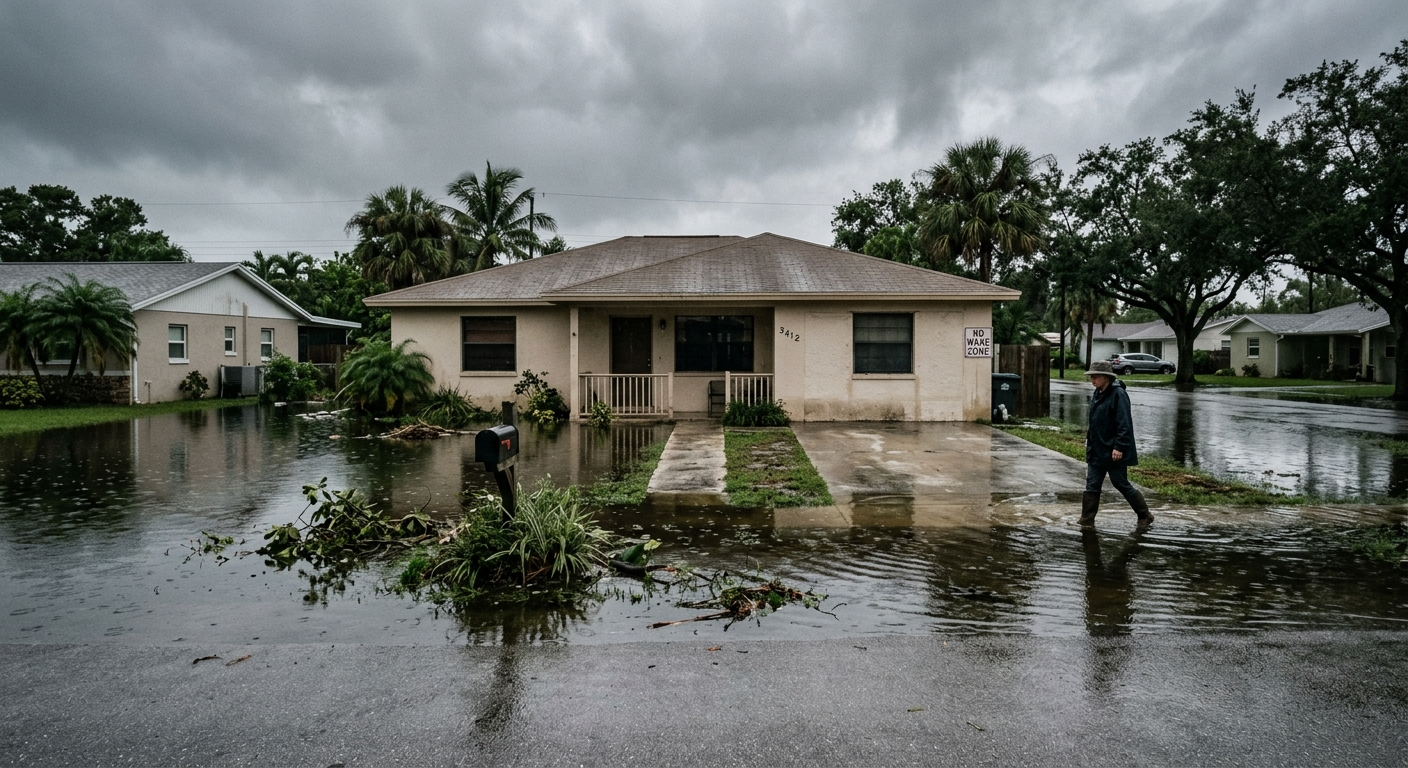
Flood damage is excluded from every dwelling fire policy, without exception. Florida flood risk is serious, especially across low-lying areas of Central Florida, and a separate flood policy through the National Flood Insurance Program (NFIP) or a private flood carrier is essential for most properties. Learn more in our breakdown of Florida flood insurance. Other common exclusions include sinkhole activity (unless added by endorsement), mold unless it results from a covered peril, and general wear and tear.
How Florida's insurance market affects dwelling fire policies
Florida's property insurance market has been under significant stress. Many carriers have pulled out of the state entirely, and those that remain have tightened underwriting standards and raised rates. This directly affects dwelling fire policies for landlords and seasonal homeowners in several ways:
Roof age matters more than ever. A home with a roof older than 15 to 20 years can be difficult or impossible to insure under a DP-3 with certain carriers. Some will only write a DP-1 or will exclude windstorm coverage if the roof is aged. In a hurricane-prone state, a windstorm exclusion is a serious problem.
Replacement cost vs. actual cash value. On a DP-1 or with older properties, insurers may only pay actual cash value (ACV) after a loss, meaning they subtract depreciation from the payout. A new roof that costs $18,000 to replace might only yield a $7,000 check if it was 12 years old and your policy pays ACV. A replacement cost value (RCV) endorsement eliminates that depreciation penalty and is worth the extra premium on most properties.
Citizens Property Insurance Corporation is Florida's insurer of last resort and does write dwelling fire policies for eligible properties. However, Citizens has its own eligibility rules, coverage limits, and rate structures. An independent agent will check both the private market and Citizens to find the best fit for your specific property.
What a dwelling fire policy costs in Florida
Premiums vary widely based on the property's location, age, construction type, roof condition, chosen form, and coverage limits. These ballpark figures can help you plan:
- DP-1 on a vacant or older home: Often $600 to $1,200 per year, though hard-to-insure properties can run higher.
- DP-2 on a mid-range rental home: Typically $1,000 to $2,000 per year in Central Florida depending on construction and location.
- DP-3 on a standard single-family rental: Commonly $1,500 to $3,500 per year in Polk County, with coastal properties or older roofs pushing higher. Wind and hail deductibles in Florida are often a separate percentage-based deductible (commonly 2% of the insured value) rather than a flat dollar amount.
Because Florida's market is so carrier-specific, the same property quoted at $1,800 with one carrier might come in at $2,600 with another. Shopping multiple carriers through an independent agent is practically required to get a fair rate.
Dwelling fire vs. landlord insurance: are they the same thing?
"Landlord insurance" is not a specific ISO form. It is a general term for insurance that protects a property owner who rents to tenants. In Florida, that coverage is almost always delivered through a DP-2 or DP-3 form paired with endorsements for fair rental value, liability, and possibly landlord-owned contents. So when an agent says "landlord policy," they typically mean a DP-3 with those endorsements built in. Our full Florida landlord insurance guide covers those details in depth.
The important takeaway: if you own rental property in Florida, do not rely on whatever policy you had when you were living in the home. That policy was almost certainly written as an HO-3 for owner-occupied use, and renting it to tenants can void your coverage entirely.
How to choose the right dwelling fire form for your property
The decision between DP-1, DP-2, and DP-3 comes down to three factors: the property's use, your budget, and the risk you are willing to carry out of pocket.
If the property is vacant and you are just trying to maintain basic coverage while you prepare it for sale or renovation, a DP-1 is a reasonable choice. If you have tenants in the home and the property represents a meaningful part of your net worth, a DP-3 with replacement cost and fair rental value coverage is almost always the smarter long-term decision. The premium difference between a DP-1 and a DP-3 on a $200,000 rental home might be $700 to $900 per year. A single wind event that destroys the roof could produce a gap of $30,000 or more between ACV and actual replacement cost. The math usually favors DP-3.
Talk through your specific situation with an agent who knows the Florida market. The right form is not always obvious from the outside.
Get the right dwelling fire coverage with Garland Insurance
Garland Insurance is an independent agency serving Lakeland and communities throughout Florida. Because we work with multiple carriers rather than a single company, we can compare dwelling fire policy options across the market to find coverage that fits your property, your tenants, and your budget.
Whether you own one rental home in Polk County or a portfolio of properties across Central Florida, our team can walk you through the DP form options, endorsements worth adding, and flood coverage your dwelling fire policy will not provide. We do not push one carrier's product. We find what actually works for your situation.
Call us at (863) 683-9334 or reach out through our contact page to get started. If you own property in Florida, you deserve to know exactly what your policy will and will not do before you need to file a claim.
Get A Quote
At Garland Insurance, securing your future is easy. Ready to protect what matters? Contact us for a quick quote and personalized insurance options!
Anna
Speak to Anna 24/7
Microphone ready
Start your custom insurance quote
Instant answers to your insurance questions
Schedule appointments or follow-ups
Personal Insurance
From auto and homeowners to renters and umbrella policies, we help protect your family and property. Let’s find coverage that fits your life.
Commercial Insurance
We customize policies for your industry's risks, like general liability and workers' comp, ensuring you can run your business worry-free.
Contact Garland Insurance
Recent Posts