Florida Mobile Home Insurance: What Manufactured Home Owners Need
Florida mobile home insurance: what every manufactured home owner needs to know
If you own a manufactured or mobile home in Florida, you already know the state throws a lot at you: hurricanes, tropical storms, flooding, and one of the most competitive and confusing insurance markets in the country. A solid Florida mobile home insurance policy is not optional. It is the difference between recovering after a disaster and starting over with no financial cushion. This post covers exactly how mobile home insurance works in Florida, what it covers, what it does not, and how to avoid being underinsured when the next storm rolls through Lakeland or anywhere else in the state.
Mobile home vs. standard homeowners insurance: why it matters
Many people assume a mobile home is covered under a standard HO-3 homeowners policy. It is not. Manufactured and mobile homes require a separate policy form, often called an HO-7 or a "mobile home insurance" policy. The reason comes down to construction. Mobile homes are built to HUD standards (or older pre-HUD standards for homes built before June 1976), and they respond to wind and water damage differently than site-built homes.
Florida insurers underwrite these properties with those differences in mind. A standard homeowners policy written on a mobile home can leave large coverage gaps, or in some cases be voided entirely after a claim because the structure did not meet the policy's eligibility requirements. If you own a manufactured home, make sure your policy is written specifically for that type of structure.
For context on how a traditional homeowners policy works in Florida, see our Florida homeowners insurance guide. The fundamentals of dwelling coverage, liability, and loss of use apply to mobile homes too, but the policy form and pricing are different.
What a Florida mobile home policy typically covers
A well-structured mobile home insurance policy in Florida generally includes several coverage components. Here is what each part actually does.
Dwelling coverage (Coverage A)
Dwelling coverage pays to repair or rebuild the physical structure of your mobile home after a covered loss. Fire, windstorm, hail, lightning, vandalism, and certain types of water damage are the most common covered perils. In Florida, wind is the main concern. Make sure your policy explicitly includes windstorm coverage and that the limit reflects the replacement cost of the home, not its actual cash value (ACV). ACV subtracts depreciation, which on an older manufactured home can leave you tens of thousands of dollars short.
Other structures
Detached carports, screen rooms, sheds, and fences on your property are typically covered under a separate "other structures" limit, usually set at 10% of your dwelling limit. If you have an enclosed carport or a large detached structure, check whether that 10% is enough to replace it.
Personal property
Your furniture, appliances, clothing, and electronics are covered under personal property coverage. Most policies default to ACV for personal property. Paying the small premium difference for replacement cost value (RCV) on your belongings is almost always worth it, because depreciation hits personal property hard.
Liability coverage
If someone is injured on your property and sues you, liability coverage pays for your legal defense and any judgment up to the policy limit. Standard limits start at $100,000, but $300,000 is a more realistic floor for most homeowners. A personal umbrella policy can extend that coverage further if needed.
Loss of use / additional living expenses
If your home is uninhabitable after a covered loss, this coverage pays for hotel stays, meals, and other extra living costs while repairs are made. Given how long Florida contractors are booked after a major storm, this coverage matters more than many people realize.
What Florida mobile home policies typically do NOT cover
Knowing the exclusions is just as important as knowing what is included. These are the most common gaps that catch Florida mobile home owners off guard.
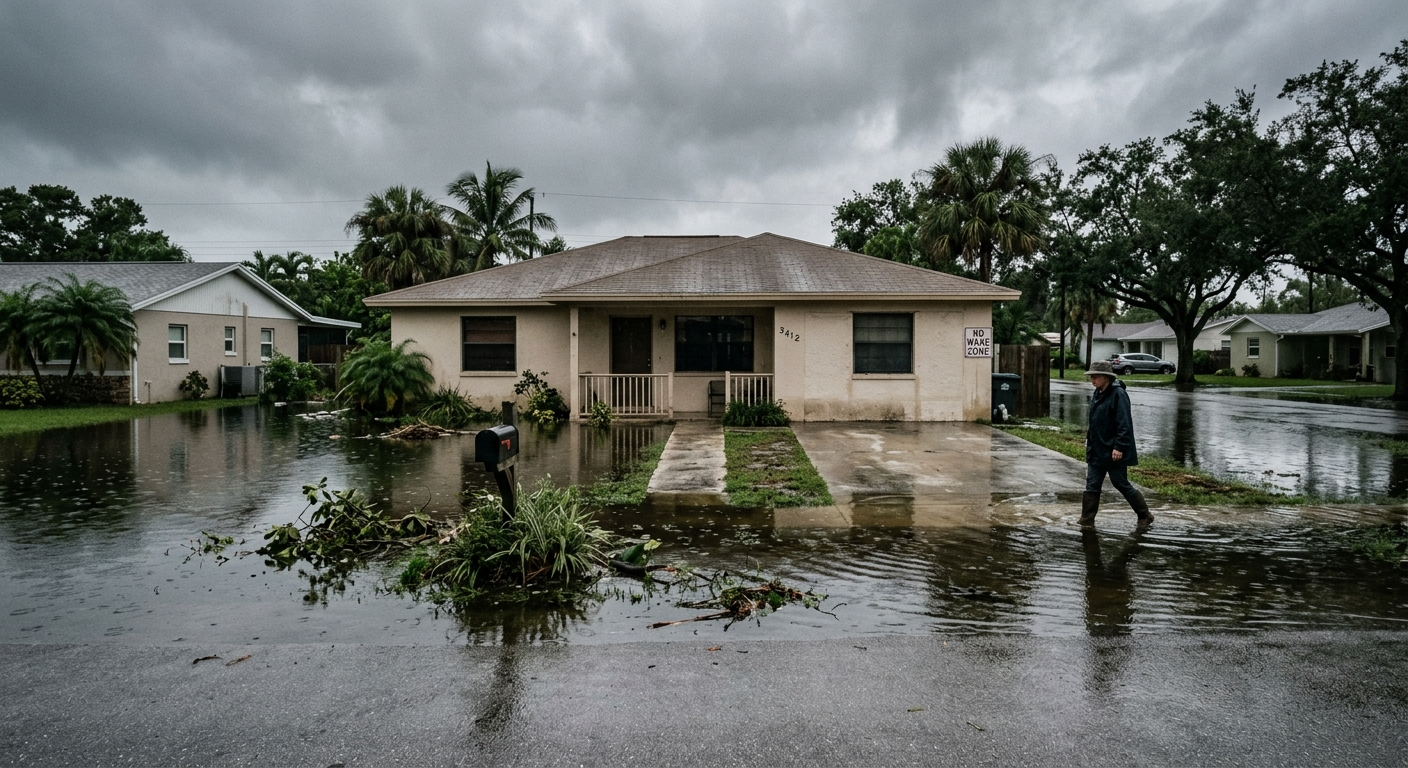
- Flood damage. Standard mobile home policies exclude flood. Not storm surge, not rising water from a river, not heavy rain that backs up into your home. Flood requires a separate policy, either through the National Flood Insurance Program (NFIP) or a private flood insurer. Given how flat Florida is, even properties outside a designated flood zone can take on water during a serious storm. Our Florida flood insurance guide explains your options in detail.
- Sinkhole damage. Florida law requires insurers to offer sinkhole coverage, but it is often sold as a separate endorsement or rider, not automatically included. If you are in Polk County, Hillsborough County, or other parts of central Florida known for sinkhole activity, ask your agent about this specifically.
- Mold and gradual water damage. Slow leaks, condensation buildup, and long-term moisture damage are typically excluded. Insurers cover sudden and accidental water damage, not maintenance failures.
- Older home depreciation. Homes built before 1994 (pre-Andrew code standards) or before June 1976 (pre-HUD) face stricter underwriting and may only qualify for ACV settlements even if you request RCV. Some carriers will not write them at all.
- Land underneath the home. If you own the lot your mobile home sits on, that land is not insured. If you rent the lot in a mobile home park, you have no insurable interest in it at all.
Florida-specific factors that affect your premium
Florida mobile home insurance costs more than in most other states, and several concrete factors drive the price up or down.
Year of manufacture
Homes built to post-1994 HUD wind standards (after Hurricane Andrew prompted new building codes) are significantly cheaper to insure than older units. A home built in 1985 will carry a much higher premium than a 2005 model, all else being equal, because it is more vulnerable to wind damage.
Tie-downs and anchoring
Florida requires manufactured homes to be anchored to the ground using an approved tie-down system. Insurers check for this. A properly anchored home earns lower wind premiums. An unanchored home may be uninsurable with many carriers.
Location and wind zone
Florida is divided into wind zones for underwriting purposes. If your home is in a coastal area or a high-wind zone, expect to pay more. Homes in Lakeland and other inland Polk County communities generally sit in a lower wind zone than beachfront properties, which helps with premiums.
Roof condition and type
A newer roof with a qualifying shape (hip roofs outperform gable roofs in wind events) can earn meaningful discounts. Florida's My Safe Florida Home program has historically offered grants for wind mitigation improvements, including roof upgrades. Ask your agent whether any current programs apply to your property.
Wind mitigation inspection
A wind mitigation inspection from a licensed inspector can directly lower your windstorm premium. The inspection documents your home's construction features, and the results are submitted to your insurer. For manufactured homes, the savings vary more than for site-built homes, but it is worth asking about.
Claims history
Your personal claims history and the property's prior claims history both factor into your rate. Florida insurers use a database called CLUE (Comprehensive Loss Underwriting Exchange) to review up to seven years of property claims. If you are buying a used mobile home, pull a CLUE report on the property before you close.
Mobile home insurance in a park vs. on your own land
Whether you own the land your home sits on or rent a lot in a mobile home community affects your insurance in a few ways.
If you own the land , your policy needs to cover the dwelling, other structures, personal property, liability, and potentially any outbuildings or fencing on your lot. This is functionally similar to a standard homeowners policy structure.
If you rent a lot in a mobile home park , your liability exposure is a bit different. You are not responsible for the common areas of the park, but you are still liable for injuries that happen on your lot or inside your home. The park's insurance does not cover your personal property or your home's structure. Do not assume any part of your coverage comes from the park's master policy.
Some mobile home parks in Florida require residents to carry a minimum level of liability coverage as a condition of the lease. Keep a copy of your declarations page handy because park management may ask for proof of insurance at renewal.
Bundling and other ways to lower your mobile home insurance cost
Mobile home insurance in Florida is not cheap, but there are real ways to reduce the cost without cutting coverage.
- Bundle with auto insurance. Pairing your mobile home policy with an auto policy through the same carrier often earns a multi-policy discount. Our post on bundling home and auto insurance for savings covers how that math works in more detail.
- Raise your deductible strategically. Florida mobile home policies often carry a separate wind or hurricane deductible, expressed as a percentage of your dwelling limit (commonly 2% to 5%). Raising your all-other-perils deductible while keeping the hurricane deductible as low as you can afford is usually the smarter tradeoff.
- Install storm shutters or impact-resistant windows. These upgrades reduce wind damage risk and are often reflected in your premium through wind mitigation credits.
- Age and loss-free discounts. Many carriers offer discounts for older policyholders and for homeowners with no claims in the past three to five years.
- Shop the market. This is where working with an independent agent pays off. Florida's admitted market for mobile homes is limited, but surplus lines carriers and specialty manufactured home insurers fill the gap. An independent agent can access multiple carriers and find competitive options that a single-carrier agent cannot.
Filing a mobile home insurance claim in Florida
Florida law gives insurers specific timelines for acknowledging, investigating, and paying claims. After a covered loss, follow this basic process.
First, make sure the property is safe before re-entering. Document everything with photos and video before any cleanup begins. Contact your insurer to open a claim as soon as possible. Florida's statute of limitations for property insurance claims is generally two years from the date of loss, but waiting months to report a claim gives insurers grounds to dispute it.
Your insurer is required to acknowledge your claim within 14 days and make a coverage decision within 90 days under Florida Statute 627.70131. If your claim is denied or underpaid, you have the right to request an appraisal or mediation. You can also hire a licensed public adjuster to represent your interests, though their fees (typically 10-20% of the settlement) come out of your payout.
For a closer look at how the post-storm claim process works, including documentation tips and your rights under Florida law, see our Florida hurricane insurance claim guide.
Get the right mobile home coverage with Garland Insurance
Garland Insurance is an independent insurance agency serving Florida homeowners, including manufactured and mobile home owners throughout the state. As an independent agency, we work with multiple carriers rather than being tied to one company. That means we compare options across the market to find coverage that fits your home, your budget, and your specific risk profile, not whatever a single company happens to offer.
Whether your home is a newer HUD-code manufactured home or an older unit in a mobile home community, our team knows the Florida mobile home insurance market and can help you avoid the coverage gaps that trip up so many policyholders after a storm.
To learn more or to request a quote, visit our mobile home insurance page or reach out to our team directly at garlandinsurance.com/contact. You can also call us at (863) 683-9334 . We are here to make sure your home is protected before the next storm season arrives.
Get A Quote
At Garland Insurance, securing your future is easy. Ready to protect what matters? Contact us for a quick quote and personalized insurance options!
Anna
Speak to Anna 24/7
Microphone ready
Start your custom insurance quote
Instant answers to your insurance questions
Schedule appointments or follow-ups
Personal Insurance
From auto and homeowners to renters and umbrella policies, we help protect your family and property. Let’s find coverage that fits your life.
Commercial Insurance
We customize policies for your industry's risks, like general liability and workers' comp, ensuring you can run your business worry-free.
Contact Garland Insurance
Recent Posts